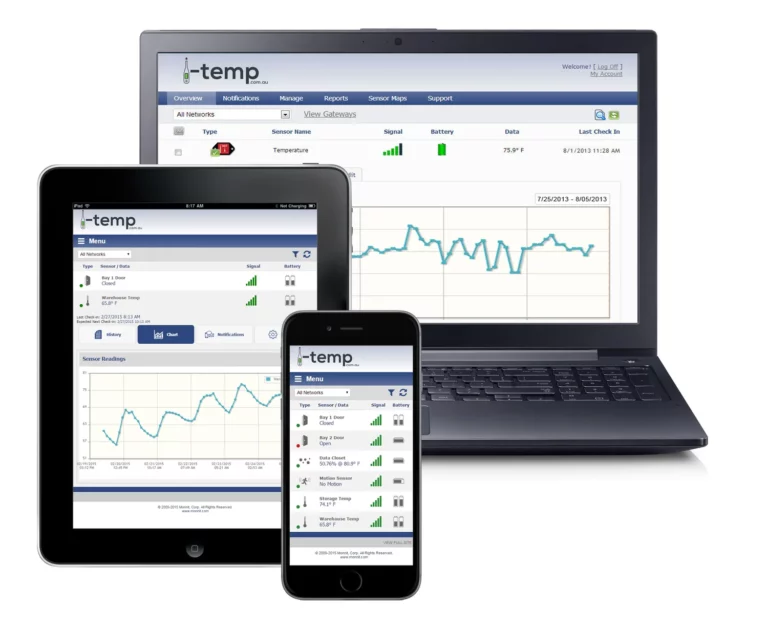

Most systems pair small probes or air sensors with a gateway or a cloud app, so managers can see temperatures in real time and get alerts when something drifts out of range.
What is wireless temperature monitoring in a commercial kitchen?
It is a network of sensors that continuously measures temperatures and sends readings to software without staff writing them down. The goal is simple: keep food in safe temperature ranges and prove it with reliable logs.
Depending on the setup, sensors sit inside refrigerators, freezers, walk-ins, prep areas, dish rooms, or hot holding equipment. Data is stored automatically and can be viewed from a phone, tablet, or desktop.
Why do commercial kitchens use wireless systems instead of manual logs?
They use them to catch issues sooner and reduce labor spent on repetitive checks. A wireless system can spot a failing gasket or a freezer left ajar long before the next scheduled clipboard round.
They also help with consistency. Manual logs can be missed during rush periods, filled out late, or written from memory. Automated records are time-stamped and harder to falsify, which supports stronger internal controls.
How does a typical wireless monitoring setup work?
A sensor measures temperature at defined intervals as part of a robust wireless temperature monitoring framework, then transmits the readings via Wi-Fi, Bluetooth, LoRaWAN, or a proprietary radio protocol. A gateway or router seamlessly relays the data to a centralized dashboard or cloud-based platform for real-time visibility and analytics.
When predefined thresholds are exceeded within the wireless temperature monitoring system, automated alerts are triggered via text, email, or push notification to enable rapid response. In addition, the platform can generate downloadable reports filtered by specific time ranges, measurement units, and locations, supporting compliance, audit readiness, and operational transparency.

What areas and equipment should they monitor first?
They usually start with critical cold storage: walk-in coolers, walk-in freezers, reach-ins, and any unit holding high-risk foods. These areas create the highest spoilage and safety risk if temperatures drift.
Next, they often add hot holding, sous vide baths, cooling stations, and transport carts. The best first targets are the places where temperature failures are common, expensive, or difficult to notice quickly.
What sensor types are used in commercial kitchens?
They typically choose between air sensors, probe sensors, and surface sensors. Air sensors are simple to deploy in fridges and freezers, while probes are better for monitoring liquid or product temperature when needed.
Some kitchens use door sensors to detect open events and humidity sensors for walk-ins where icing or moisture swings matter. The right mix depends on whether they need equipment temperature, product temperature, or operational context.
What alert features matter most for busy kitchen teams?
They need alerts that are fast, clear, and actionable. That usually means escalation rules, separate alert routes by shift, and reminders until someone acknowledges the issue.
Good systems support alert delays to avoid false alarms during defrost cycles or frequent door openings. They also allow different limits for different units, since a freezer, a produce cooler, and a hot box do not share the same targets.
How do they choose between Wi‑Fi, Bluetooth, and long-range wireless options?
They choose based on coverage, interference, and IT constraints. Wi‑Fi is convenient but can be unreliable in metal-heavy environments or where guest networks and firewalls complicate onboarding.
Bluetooth is common for short-range or phone-based checks, but it may not suit large facilities. Long-range options like LoRaWAN are useful for big footprints or multi-building sites, especially when they want stable coverage with minimal network dependency.
How accurate do sensors need to be for food safety?
They need accuracy that supports confident decisions, not just trending. In practice, kitchens look for sensors that are calibrated, have documented accuracy specs, and allow periodic verification against a reference thermometer.
Equally important is placement. A highly accurate sensor placed near an evaporator fan can misrepresent average cabinet temperature. Good deployment focuses on representative locations and stable mounting.
What is the difference between equipment temperature and product temperature?
Equipment temperature is the ambient air or surface temperature inside a unit, which is what most wireless sensors capture. Product temperature is the internal temperature of the food, which determines safety during cooking, cooling, and holding.
Wireless monitoring is strongest for equipment oversight and early warning. For critical processes like cooling or final cook verification, they may still use handheld probes and record those readings alongside automated logs.
How do wireless logs help with compliance and inspections?
They provide continuous, time-stamped records that can be filtered by unit and date range. That makes it easier to show that storage stayed within set limits and that teams responded to deviations.
Many platforms also document acknowledgements and corrective actions. That turns a temperature excursion from a vague incident into a traceable event with a timeline, which is exactly what auditors and inspectors tend to ask for.
What are the most common mistakes when implementing these systems?
They often deploy sensors without mapping workflows, so alerts go to the wrong people or no one responds during off-hours. Another frequent issue is placing sensors in poor locations, leading to nuisance alarms and staff distrust.
They also underestimate onboarding. If teams are not trained on what an alert means and what to do next, the system becomes background noise. Clear procedures and ownership matter as much as the hardware.
What should they look for when buying a wireless monitoring solution?
They should prioritize reliability, alert controls, reporting, and calibration support. A good vendor can explain battery life expectations, signal behavior in stainless-heavy rooms, and how the system handles outages.
They also benefit from looking at total cost, not just sensor price. Subscription fees, replacement probes, calibration services, and installation time can change the long-term value more than the upfront kit cost.
How can they roll it out without disrupting service?
They can start with a small pilot covering the most critical units and one shift team. That helps them tune thresholds, alert delays, and escalation paths before scaling.
After that, they can expand unit by unit, validating sensor placement and training staff as they go. A staged rollout reduces false alarms and builds trust, which is key to long-term adoption.
FAQs (Frequently Asked Questions)
What is wireless temperature monitoring in commercial kitchens?
Wireless temperature monitoring in commercial kitchens involves using connected sensors to continuously track temperatures of fridges, freezers, and hot holding equipment automatically. This system reduces manual checks, detects problems faster, and creates reliable, easy-to-audit temperature records accessible via phones or desktops.
Why should commercial kitchens switch from manual logs to wireless temperature monitoring systems?
Commercial kitchens use wireless systems to catch temperature issues sooner and reduce labor spent on repetitive manual checks. Wireless monitoring ensures consistent, time-stamped records that are harder to falsify, helping maintain food safety and supporting stronger internal controls compared to manual logging prone to errors or omissions.
How do wireless temperature monitoring systems work in a commercial kitchen environment?
Sensors measure temperatures at set intervals and transmit readings via Wi-Fi, Bluetooth, LoRaWAN, or proprietary protocols to gateways or cloud platforms. Managers receive real-time data and alerts through texts, emails, or push notifications when temperatures drift out of safe ranges. The system also generates downloadable reports for audits and compliance.

Which kitchen areas and equipment should be prioritized for wireless temperature monitoring?
Critical cold storage units like walk-in coolers, freezers, and reach-in refrigerators should be monitored first due to high spoilage risks. Afterward, hot holding units, sous vide baths, cooling stations, and transport carts are added. Priority goes to locations where temperature failures are common, costly, or hard to detect quickly.
What types of sensors are commonly used for wireless temperature monitoring in commercial kitchens?
Common sensor types include air sensors for ambient temperatures inside fridges/freezers, probe sensors for liquid or product temperatures, surface sensors for equipment surfaces, door sensors to detect open events, and humidity sensors for moisture-sensitive areas. The choice depends on whether monitoring equipment conditions or actual product temperatures is needed.
How do alert features enhance the effectiveness of wireless temperature monitoring systems for busy kitchen teams?
Effective alert features provide fast, clear notifications with escalation rules tailored by shift schedules. They include reminders until acknowledged and support alert delays to avoid false alarms during defrost cycles or frequent door openings. Customizable limits per unit ensure relevant alerts that help teams respond promptly to maintain food safety.
Click here for about: Why Food Safety Software HACCP Is Replacing Paper-Based Systems